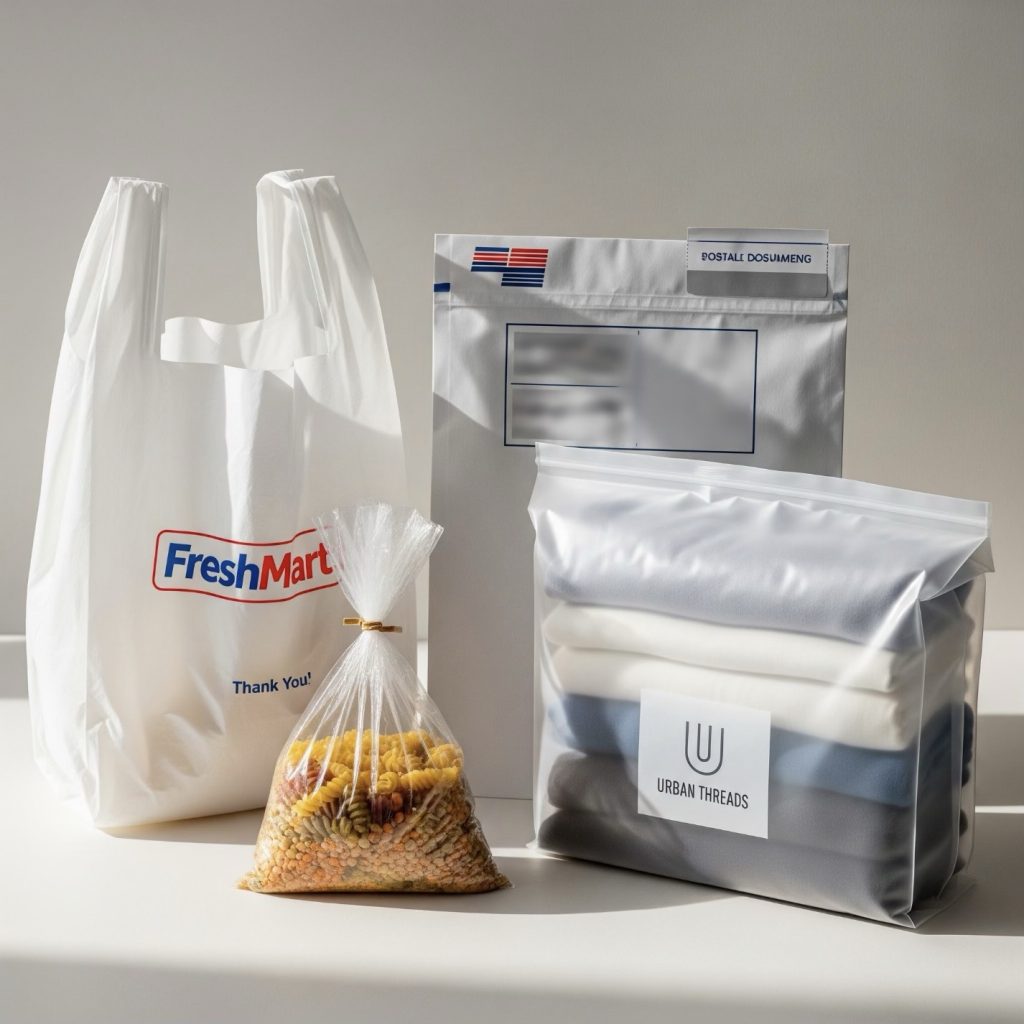
The correct bag thickness is a balance between strength, cost efficiency, and product safety. A film that is too thin may tear, while a film that is too thick increases production costs without real necessity.
How Is Bag Thickness Measured?
The thickness of polyethylene film is measured in microns (μm).
1 micron = 0.001 mm
The higher the micron value, the thicker and stronger the bag.
The most common options:
- 10–20 μm — thin packaging bags
- 25–40 μm — standard retail bags
- 40–70 μm — durable bags for medium loads
- 70–120 μm — reinforced bags for heavy goods
What Determines the Required Thickness?
✔ Product weight: The heavier the product, the greater the required thickness.
✔ Product type: Sharp corners, hard edges, or bulk materials create additional stress on the packaging.
✔ Transportation method: Logistics, storage, and transportation increase the risk of tearing.
✔ Type of polyethylene:
- PE (LDPE) — soft and elastic
- LLDPE — stronger tear resistance
- HDPE — rigid but can be thinner with the same strength
The material affects the thickness required for reliable packaging.
What Bag Thickness Is Needed for Different Products?
🥦 1. Vegetables, fruits, bread
Recommended thickness: 12–20 μm.
Suitable for supermarket packaging or lightweight products up to 1–2 kg. The key factors are elasticity and ventilation.
🛍 2. Clothing and textiles
Recommended thickness: 25–40 μm.
Optimal for branded packaging, die-cut handle bags, and online stores. Provides protection from moisture and tearing.
📦 3. Courier bags
Recommended thickness: 50–70 μm.
Higher strength is required because the product is transported and may be exposed to mechanical stress.
🧱 4. Construction goods and hardware
Recommended thickness: 60–100 μm.
Especially important for fasteners, metal pipes, and products with sharp edges.
🥔 5. Bulk products (sugar, grains, animal feed)
Recommended thickness: 40–80 μm.
Depends on the packaging weight, storage conditions, and sealing type.
🛒 6. “T-shirt” supermarket bags
- 12–15 μm — light purchases
- 18–22 μm — standard load
- 25+ μm — reinforced options
Does Greater Thickness Always Mean Better Packaging?
No. Sometimes the thickness can be reduced by using LLDPE or mLLDPE and correctly calculating the bag width. This allows cost reduction by 5–15% without losing strength.
How to Determine the Right Thickness?
The best approach:
- Analyze the weight and type of the product
- Consider logistics conditions
- Choose the material (PE, LLDPE, HDPE)
- Conduct test samples
A full-cycle manufacturer can:
- select the optimal raw material composition
- produce a test batch
- calculate load capacity
Thickness Economics: How Not to Overpay
Even a 5 μm difference in large production runs can represent significant savings.
For example, reducing thickness from 50 μm to 45 μm with a run of 500,000 bags results in significant raw material savings.
There is no universal thickness for all products.
Each product requires an individual calculation.